
Hurricane season electrical prep for Sanford homeowners
By Thomas Quinn · Updated 2026-07-06
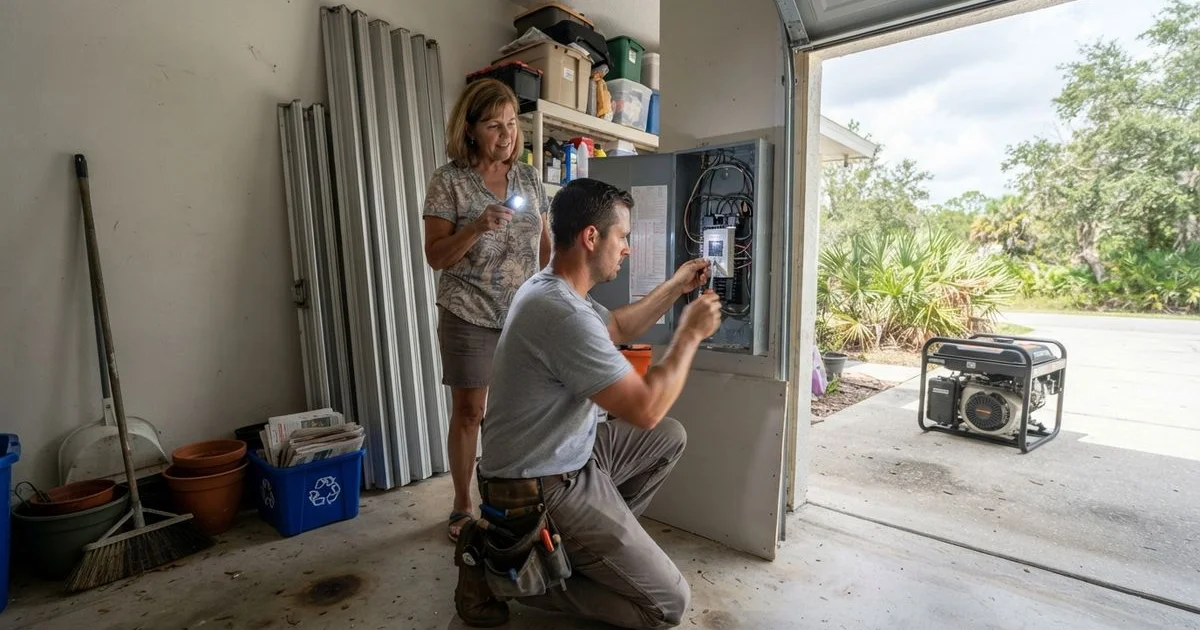
Storm season in Central Florida is predictable in timing if not in severity, and electrical prep is one of the areas homeowners tend to think about only once a storm is already in the forecast. By then, generator installers and electricians are booked solid. Getting ahead of it earlier in the year gives you actual options instead of whoever happens to have an opening.
Before the season: what to check
Start with the panel itself. An electrician can confirm it’s in good condition, has no loose or corroded connections, and has capacity for anything you’re planning to add, like a generator transfer switch. This is also a good time to flag anything that’s been nagging, like a breaker that trips occasionally, since storm season stress-tests a panel that’s already marginal.
Surge protection is worth a specific look. A whole-house surge protector installed at the panel handles the voltage spikes that come with grid switching, near-strikes, and power restoration after an outage, which is different from the point-of-use surge strips protecting a single device. It won’t stop a direct lightning hit, but that’s a narrow scenario compared to the much more common grid-related spikes that damage HVAC systems, appliances, and electronics during storm season.
Backup power: matching the option to your needs
Generator installation is the biggest prep decision for a lot of homeowners, and it comes in a few tiers. A portable generator with a manual transfer switch or interlock kit covers essential circuits during an outage and costs less upfront, but requires you to be home and manage it manually. A whole-home standby generator, permanently installed with an automatic transfer switch, kicks in without you doing anything and can cover more of the house, at a higher installed cost.
| Option | What it covers | What it requires |
|---|---|---|
| Portable generator + interlock kit | Select circuits you plug in or switch manually | You’re present to start it and manage fuel |
| Whole-home standby generator | Most or all of the house automatically | Permit, dedicated fuel line, higher upfront cost |
| Whole-house surge protector | Panel-level protection for connected devices | Installed at the panel, no ongoing management |
None of these decisions are urgent the week before a storm arrives. They are urgent the month before, since permitting and installation both take time.
If someone in your home relies on powered medical equipment
For households running a CPAP machine, oxygen concentrator, refrigerated medications, or other equipment that can’t go without power for long, backup power planning is less about convenience and more about safety margin. A whole-home standby generator removes the guesswork, but even a portable generator sized and staged correctly ahead of time, with a clear plan for who starts it and when, closes most of the gap. This is worth discussing directly with whichever electrician or generator installer you’re working with, since sizing and priority circuits matter more in this situation than in a general comfort-and-convenience setup.
During the storm
If you lose power, avoid running a portable generator in a garage or enclosed space, even with the door open, due to carbon monoxide risk. Keep it outside, away from windows and doors. If flooding threatens the area around your electrical panel or meter, and you can safely do so before water reaches it, shutting off the main breaker is a reasonable precaution; if water has already reached the panel, stay away from it and call your utility company rather than approaching it yourself.
After the storm: what to look for before flipping anything back on
Check for obvious water intrusion around the panel and outlets, especially in a garage or ground-floor utility area. A burning smell, visible scorch marks, or a breaker that won’t reset are all reasons to call an electrician before restoring power to that circuit yourself. If your home lost power and came back on with flickering lights or appliances behaving oddly, that can indicate a voltage irregularity from the utility restoration process, worth a call to confirm nothing was damaged. If you can’t reach your regular electrician right away, our guide on how to spot a real 24/7 emergency electrician can help you separate a genuine on-call operation from one that just advertises the label.
This is general safety guidance, not a substitute for a licensed electrician’s in-person assessment after storm damage.
Compare generator installers and electricians serving Sanford on the homepage, and see our methodology for how we score response speed and storm-season reliability.
Frequently asked questions
- When should I start hurricane electrical prep?
- Before the season ramps up, since generator installers and electricians book out fast once a storm is in the forecast. Getting a panel checked, a transfer switch installed, or surge protection added in the spring avoids the last-minute scramble.
- Is a whole-house surge protector worth it for storm season?
- For most Florida homes with electronics, HVAC equipment, and appliances worth protecting, yes. It won't stop a direct lightning strike, but it does protect against the voltage spikes that come with grid switching and near-strikes during storms.
- Do I need a permit for a generator installed before hurricane season?
- Yes, a standby generator with an automatic transfer switch typically requires a permit and inspection. Trying to rush this the week before a storm usually isn't realistic, which is part of why early prep matters.
- Is it safe to check my panel myself after a storm?
- Visual checks are fine: look for water intrusion, burning smells, or a breaker that won't reset. Don't open the panel cover or touch anything if there's standing water nearby or if you smell something burning. Call an electrician instead.