
Electrical safety for aging in place: a checklist for adult children
By Thomas Quinn · Updated 2026-07-18
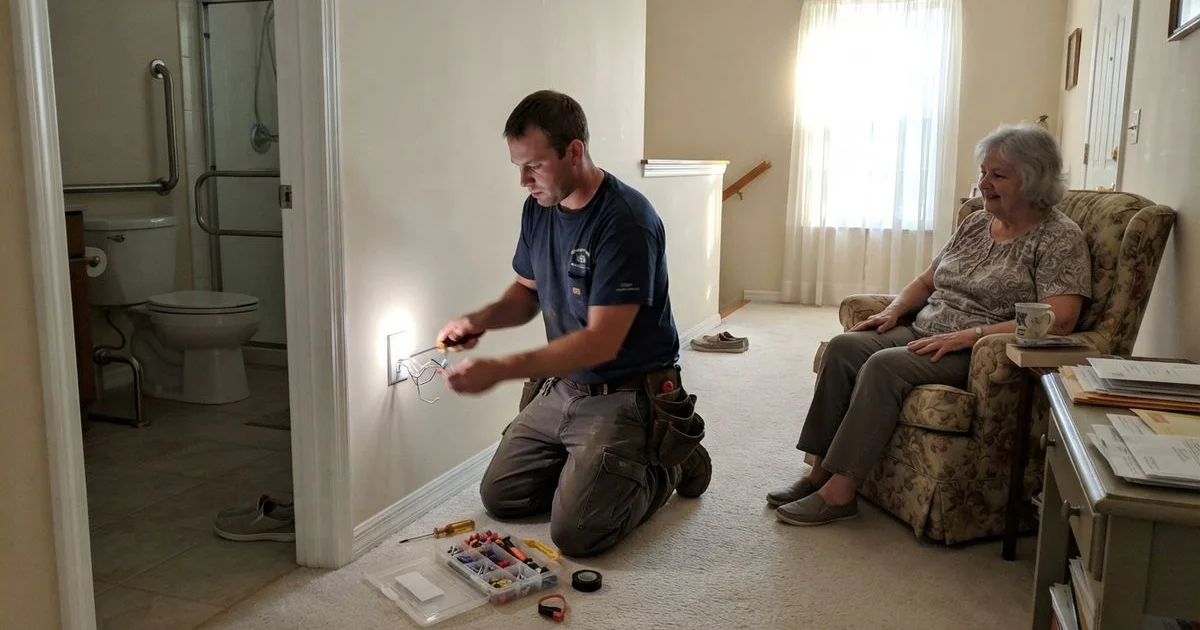
A parent staying in their own home longer is a decision most families are glad to support, but it’s worth pairing with a practical look at whether the home’s electrical setup still fits how they move through it now. Most of what matters here is straightforward and inexpensive to fix, which makes it a good first step before considering bigger changes.
Lighting: the highest-impact fix
Dim or uneven lighting is one of the clearest, most fixable contributors to fall risk in an aging parent’s home. Walk through the house at the times of day it’s actually used, including at night, and note any hallway, staircase, or bathroom that relies on a single dim fixture or requires reaching for a switch in the dark. Adding fixtures, upgrading to brighter LED bulbs, or installing motion-sensor lighting along the path from bedroom to bathroom are all relatively low-cost changes with an outsized safety benefit.
Outlets and switches: accessibility matters
Standard outlet height, close to the floor, requires bending or kneeling, which becomes a real barrier and a fall risk for someone with limited mobility. Residential electricians can relocate or add outlets at a more accessible height in key rooms, particularly the kitchen and bedroom. Similarly, standard toggle light switches can be harder to operate for someone with arthritis or reduced grip strength; rocker-style switches are an easy, inexpensive swap.
GFCI protection in wet areas
Bathrooms and kitchens should have GFCI-protected outlets, which matters for everyone but carries extra weight in a home where a fall near water is a heightened risk. If the home predates current GFCI requirements, this is a straightforward, inexpensive retrofit worth prioritizing over other upgrades.
| Area to check | What to look for | Typical fix |
|---|---|---|
| Hallways and stairs | Dim lighting, switches far from bed/door | Add fixtures, motion-sensor lights |
| Bathroom | No GFCI, low light, hard-to-reach switch | GFCI retrofit, brighter fixture |
| Kitchen | Low outlets, cluttered cords | Raised outlets, cord management |
| Whole home | Old wiring, warm outlets, tripping breakers | Full electrical evaluation |
| Entry points | Poor exterior lighting | Motion-sensor exterior lights |
Smart plugs and simple monitoring
For families who live farther away, a few smart plugs on lamps or small appliances can offer a quiet way to check that the home’s routine looks normal, without any cameras or intrusive monitoring. This isn’t a substitute for regular visits or calls, but it’s a low-cost, low-effort addition worth mentioning to an electrician already doing other work in the home.
Cords, extension leads, and clutter
Loose cords across walking paths are both an electrical hazard and a trip hazard, a combination worth taking seriously. If a room relies on extension cords or power strips as permanent solutions rather than short-term fixes, that’s worth addressing with additional outlets rather than more cords.
Backup power for medical equipment
If a parent relies on powered medical equipment, an oxygen concentrator, a CPAP machine, refrigerated medication, a stairlift, backup power planning deserves its own conversation. A brief outage that’s a minor inconvenience for most households can be a genuine safety issue in this situation. Even a modest portable generator, staged and ready with a clear plan for who starts it, closes most of that gap; a whole-home standby generator removes the need for anyone to manage it manually during an emergency, which matters if the parent lives alone.
When to call an electrician versus handle it yourself
Swapping a light bulb for a brighter one, or a standard switch cover for an easier-to-use style, is reasonable to do yourself. Adding outlets, relocating switches, installing hardwired motion-sensor lighting, or evaluating whether the home’s wiring is in good condition, especially in an older home, is worth a licensed electrician’s visit. Many will do a broader walkthrough and flag issues beyond what you’d catch on your own, including panel condition and whether GFCI protection is missing in areas that need it.
Making the conversation easier
Framing this as a general home safety check rather than singling out any one issue tends to go over better, and pairing it with something universally reasonable, like a smoke detector test, can make the electrical walkthrough feel like routine maintenance rather than a difficult conversation about independence.
Compare residential electricians serving Sanford on the homepage, and see our methodology for how we evaluate safety-focused, in-home service quality.
Frequently asked questions
- What's the most common electrical safety issue in an aging parent's home?
- Insufficient lighting, especially in hallways, stairs, and bathrooms, is one of the most common and easiest to fix issues, since dim lighting is a real contributor to fall risk for older adults.
- Should outlets be moved higher for a parent with mobility issues?
- It can help. Standard outlet height requires bending down, which is a fall risk for someone with limited mobility or balance issues. An electrician can add or relocate outlets to a more accessible height.
- Is it worth adding motion-sensor lighting?
- Often yes, particularly for hallways, bathrooms, and the path from bedroom to bathroom at night. It removes the need to find a switch in the dark, which is a common fall scenario.
- How do I bring this up without it feeling like an intrusion?
- Framing it as a general home safety check, similar to smoke detector testing, rather than singling out age-related decline, tends to go over better. Many electricians are used to this conversation and can help present it that way during the visit.
Related on this site
- Browse residential electrician providers
- Aluminum wiring and knob-and-tube wiring: how to tell if your home is at risk
- Buying or selling a home in Sanford: electrical issues that come up at inspection
- Level 1 vs. Level 2 home EV chargers: which one do you need
- Electrical rights and responsibilities for Sanford renters and landlords
- All guides →